
What Is Person-Centred Counselling?
Person-centred counselling is often described as “non-directive”, and for a lot of people, that phrase can raise an eyebrow.
You might wonder, Does that mean I have to do all the work? Will I be left to talk with no guidance? What if I do not know what I need?
These are very understandable questions, especially if you are used to being given tools, strategies, or advice. The reality of person-centred counselling is often very different from what people imagine.
What Person-Centred Counselling Really Is
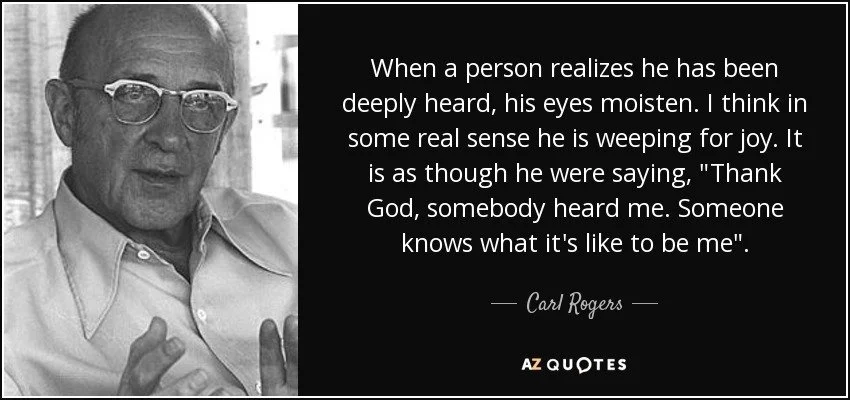
Person-centred counselling is a way of working that places you at the centre of the process. It was developed by Carl Rogers and is based on a simple but powerful idea: when people feel deeply heard, accepted, and understood, change happens naturally.
Rather than the counsellor being the expert on you, the relationship becomes a space where you can start to understand yourself more clearly. Your counsellor is actively engaged, listening closely, reflecting, noticing patterns, and gently helping you stay with what matters.
You are not left alone. You are accompanied.
Why Non-Directive Does Not Mean Passive
One of the biggest myths about person-centred counselling is that it means the counsellor does very little. In reality, it requires a high level of skill, presence, and attunement.
Non-directive means the counsellor does not impose solutions, goals, or techniques onto you. Instead of telling you what to do, they help you explore what is happening for you and why. This is important because advice and tools can sometimes bypass the deeper issue.
Many people are very good at coping. They have tried strategies, read books, listened to podcasts, and pushed themselves to function. What they often have not had is a space where they can slow down and really be with their experience.
Person-centred counselling creates that space.
Why This Approach Can Be More Helpful Than Tools Alone
Tools can be useful, but they often focus on managing symptoms rather than understanding their roots. Person-centred counselling works differently.
Instead of asking, “How do we stop this feeling?”, the focus becomes, “What is this feeling trying to tell me?”
Instead of fixing, the work is about understanding, acceptance, and integration. Over time, this often leads to changes that feel more solid and lasting, because they come from within rather than being imposed from the outside.
Clients often discover that once they understand themselves more deeply, they naturally begin to make different choices, set clearer boundaries, and respond differently to situations, without needing to be told how.
What It Feels Like as a Client
In person-centred counselling, you do not need to arrive with an agenda or a clear goal. You can bring confusion, uncertainty, or even the feeling of “I do not know why I am here”.
Your counsellor will help you slow things down, notice what is happening emotionally, and make sense of your experiences in a way that feels manageable and safe. You are not expected to perform, progress quickly, or get it right.
Many clients find this approach relieving, especially if they are tired of feeling like they have to work harder, try more, or fix themselves.
Is Person-Centred Counselling Right for You?
Person-centred counselling may be a good fit if you:
Feel tired of constantly trying to fix yourself
Want to understand yourself rather than just manage symptoms
Value being met with warmth, acceptance, and curiosity
Want change that feels authentic and self-led
Have tried tools and strategies but still feel stuck
At Polaris Counselling Hub, person-centred counselling offers a space where you can show up exactly as you are and be supported to find your own way forward, with someone alongside you.
If you are curious about therapy but worried you will be expected to carry everything alone, person-centred counselling may feel gentler and more supportive than you expect.
With care,
Team Polaris
